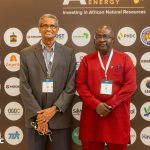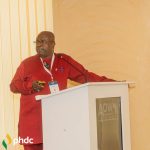


The Petroleum Hub Development Corporation (PHDC), the statutory agency established by the Government of Ghana to develop Africa’s first integrated Petroleum and Petrochemical Hub, together with Touchstone Capital Partners (TCP) and its international consortium, today confirmed continued advancement of one of Africa’s most ambitious integrated energy, industrial and infrastructure development programmes.
Structured as a multi-phase project, the Ghana Integrated Petroleum Hub is designed to establish Ghana as the leading petroleum, petrochemical, logistics and industrial gateway for West Africa under the African Continental Free Trade Area (AfCFTA).
According to the draft Plan, the programme represents an estimated US$60 billion long-term private investment opportunity. Phase I comprises approximately US$ 12 billion of investment under the agreement between PHDC and the TCP-UIC Consortium.
Upon Completion, the Petroleum Hub Is Planned to Include;
- Three world-class refineries with an initial combined capacity of 900,000 barrels per day, expandable to 1.5 million barrels per day
- Five integrated petrochemical complexes
- Approximately 10 million cubic metres of petroleum storage
- LNG receiving and gas-processing infrastructure
- Gas-to-Power generation facilities
- Marine terminals and deep-water jetties
- Industrial parks and export processing zones
- Rail, road, utility and logistics infrastructure across an approximately 20,000-acre integrated industrial city
A National Ecosystem, Not a Single Project
PHDC and Touchstone Capital Partners are positioning the Hub as an integrated development ecosystem in which energy, petrochemicals, logistics, manufacturing, digital infrastructure, finance, education and healthcare reinforce one another rather than standing as isolated assets.
Independent published estimates place direct and indirect employment from the completed programme at approximately 780,000 jobs by 2036, with additional multiplier effects anticipated across supply chains, local enterprise and regional trade as phased investment and construction milestones are achieved.
Programme planning anticipates that a share of long-term project revenues and associated economic activity will support broader social investment — including education, healthcare, technical training and community development — alongside the core industrial build-out, subject to phased implementation and investor commitments.
The project is intended to strengthen regional energy security, increase domestic refining capacity, promote industrialisation, expand exports, support regional logistics and position Ghana as one of Africa’s leading integrated energy and industrial economies.
Touchstone Capital Partners’ Role
Touchstone Capital Partners supports the programme by coordinating international investment partnerships, consortium development, project structuring, financing strategy and institutional engagement, in accordance with internationally recognised project finance, ESG and corporate governance principles.
Touchstone’s global partner network — spanning institutional investors, EPC contractors, technology providers, operators, export credit agencies and development finance institutions — is being mobilised to advance the programme through the stages of due diligence, structuring and financial close required for a project of this scale. As with any large infrastructure programme, final funding commitments remain subject to completion of technical, legal and financial due diligence and applicable regulatory approvals.
Touchstone’s Project Development Methodology
Touchstone Capital Partners applies a proprietary, staged development framework across its platforms, designed to take a project from origination through to institutional and capital-markets readiness:
- Origination & structuring — early-stage project definition, technical and commercial feasibility, and governance design.
- Risk allocation & bankability — structuring risk-sharing arrangements among sponsors, EPC contractors, operators, insurers and lenders in line with internationally recognised project finance standards.
- Primary market financing — assembling the sponsor, lender and development-finance capital required to reach financial close and construction.
- Secondary market access — as the project reaches operational maturity, supporting access to a broader base of institutional investors.
- Digital and capital-markets pathway — where appropriate, supporting the eventual transition of qualifying, revenue-generating assets toward broader capital-markets or digital investment access, subject to regulatory requirements in the relevant jurisdictions.
This staged methodology is applied by Touchstone across its platform generally. Where the Ghana Integrated
Energy & Industrial Hub sits within this framework at any given time depends on the programme’s actual progress against technical, commercial, financing and regulatory milestones, which will be confirmed as each phase is achieved.