
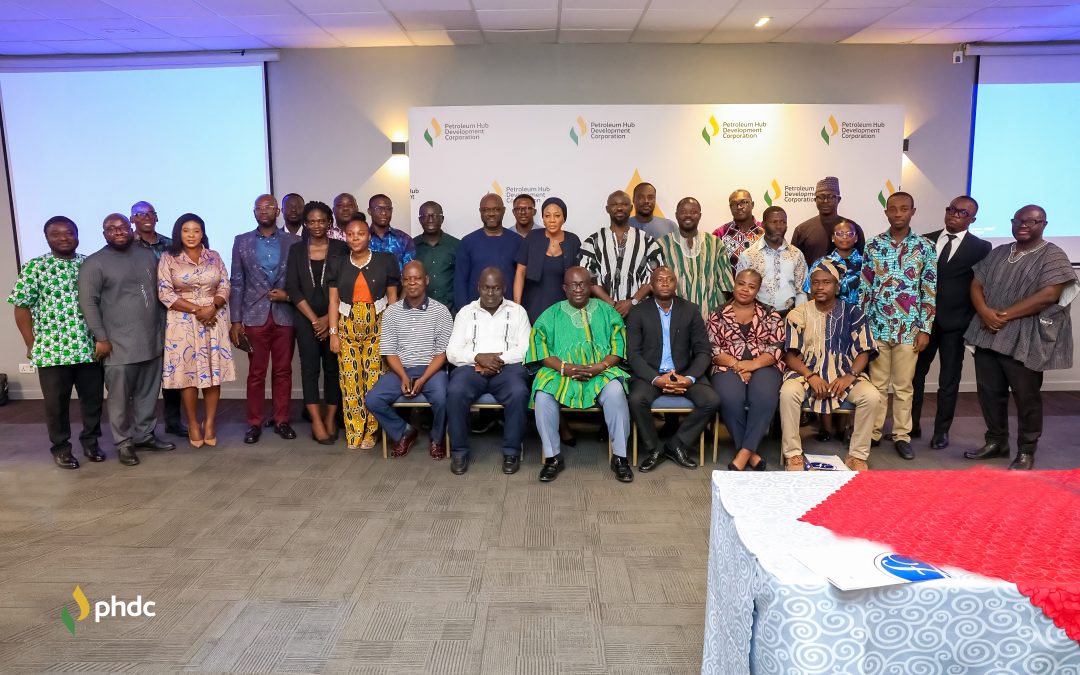
The Petroleum Hub Development Corporation (PHDC) on Thursday, March 4, 2026, held a highly productive and successful strategic engagement with leading Civil Society Organizations (CSOs) in the country’s energy sector.
The event, hosted at the Fiesta Royale Hotel in Accra, brought together representatives from over 25 CSOs who engaged extensively with PHDC management, led by the Chief Executive Officer, Dr Toni Aubynn.
The primary objective was to deepen the CSOs’ understanding and appreciation of the Petroleum Hub project’s strategic role in strengthening Ghana’s energy security, generating sustainable job opportunities, and advancing the country’s industrialisation agenda.
The session also served as a foundational platform for PHDC and the CSOs to embark on a structured, long-term partnership that will enable both parties to engage frequently and constructively in support of the project’s success.
In his opening remarks, Dr Toni Aubynn noted that the initiative stemmed from PHDC’s recognition of the CSOs as critical partners in developing the Petroleum Hub. Drawing on decades of experience in Ghana’s extractive and related sectors, Dr Aubynn highlighted the paramount importance of extensive stakeholder engagement for projects of this magnitude.
“We at PHDC firmly believe that no major national infrastructure project can succeed without public trust, transparency, and continuous dialogue with the communities it serves. Your presence here today is something we value deeply,” he stated.
“As a leader with over two decades in the extractive sector, one lesson stands out: projects do not fail due to engineering or financing challenges alone. They fail when communities are not heard, when stakeholders are excluded, when social and environmental concerns are sidelined, and when policy decisions diverge from the core pillars of sustainable development,” parts of his speech read.
Dr Aubynn further acknowledged the vital role of CSOs as a bridge between the Corporation, government, and communities, particularly those in the Jomoro area, where the project is slated for development.
“Civil Society Organizations play a pivotal role in national development. Positioned between policy formulation and the people, you amplify community voices, scrutinise public projects, and ensure development delivers tangible human outcomes—protecting livelihoods, promoting equity, and safeguarding the environment,” he added.
The engagement allowed PHDC management to comprehensively address a wide range of questions and concerns raised by the CSOs, including land use, environmental protection, community livelihoods, governance transparency, and long-term socio-economic impacts.
The participating CSOs commended PHDC’s leadership for the open and inclusive dialogue, noting that the session had significantly enriched their understanding of the project, strengthened their capacity to contribute meaningfully, and enhanced their appreciation of their role in advancing this transformative initiative for Ghana’s energy sector.
This session forms part of PHDC’s broader stakeholder engagement strategy, aimed at building capacity, fostering understanding, and securing inclusive buy-in from all major stakeholders to drive the successful realisation of the Petroleum Hub project.


About the PHDC
The Petroleum Hub Development Corporation (PHDC) was established under the Petroleum Hub Development Corporation Act, 2020 (Act 1053), to lead the development of a world-class petroleum and petrochemical hub in Ghana. The hub is intended to serve the energy needs of the West African sub-region and the broader continent.
PHDC aims to promote innovation, research, and strategic infrastructure development to meet Africa’s growing demand for petroleum products and services. By creating an integrated petroleum value chain, the Corporation seeks to unlock economic opportunities, foster industrial growth, and create sustainable employment for Ghanaians and citizens across Africa.
About the Petroleum Hub Project
The Petroleum Hub Project will be located in Jomoro, in Ghana’s Western Region. The hub will comprise: Three refineries with a total capacity of 900,000 barrels per stream day (BPSD), Five petrochemical plants with a minimum capacity of 90,000 BPSD. Storage tanks with a cumulative capacity of 10 million cubic meters and at least two jetties to support import and export activities.
The project is poised to position Ghana as a leading petroleum and petrochemical hub in Africa, enhancing regional energy security and economic integration.