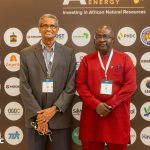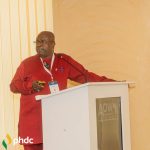


The Chief Executive Officer of the Petroleum Hub Development Corporation (PHDC), Dr Tony Aubynn, has called for a bold and forward-looking economic partnership between Ghana and its diaspora community.
He delivered this message at the Diaspora Reset Engagement Conference (DREC 2025), held in Birmingham, United Kingdom, where he urged Ghanaians abroad to seize emerging opportunities within the country’s energy and industrial ecosystems.
Addressing a diverse audience of investors, policymakers, and professionals, Dr Aubynn stated that Ghana is entering a defining decade in which the combined efforts of the state, private sector, and diaspora will determine the scale and success of national transformation.
He emphasised that the Petroleum Hub project — set to become one of Africa’s largest integrated energy and petrochemical complexes — requires not only global partnerships but also strategic and active participation from the diaspora.
“The time has come for a new generation of economic alliances between Ghana and its diaspora. The Petroleum Hub is a game-changing national asset, and we need our diaspora as co-investors, innovators, and partners in expanding Ghana’s energy economy,” he said.
Dr Aubynn outlined several high-impact avenues through which the diaspora can engage in Ghana’s development while securing long-term returns. These include:
- Diaspora Bonds for Energy and Industrial InfrastructureHe proposed the introduction of dedicated diaspora bonds to mobilise capital for refinery development, petrochemical facilities, logistics infrastructure, and energy transition projects — offering competitive returns backed by transparent and robust governance.
- Co-Investments in Large-Scale Energy ProjectsDr Aubynn encouraged diaspora investors to participate in structured co-investment frameworks, enabling them to partner with institutional investors, private equity funds, and state-backed entities to finance the Petroleum Hub’s multi-billion-dollar infrastructure network.
- Financing Local Startups and SME Supply Chains
He stressed the importance of building a strong local ecosystem to support the hub, urging members of the diaspora to invest in local startups, SMEs, and service companies operating in logistics, maintenance, fabrication, technology solutions, and energy services.
“It is not only about investing in refineries and petrochemical plants. It is also about nurturing the local entrepreneurs and innovators who will supply, maintain, and sustain the hub. The diaspora can play a catalytic role in financing Ghana’s next generation of energy and industrial startups,” he added.
Dr Aubynn highlighted the Petroleum Hub’s fully integrated structure — encompassing refineries, petrochemical plants, storage terminals, marine facilities, and supporting infrastructure — positioning it as the backbone of Ghana’s long-term industrialisation programme and a competitive player in the regional energy market.
He assured participants that the PHDC has significantly strengthened its investment frameworks, transparency mechanisms, and governance structures to ensure that diaspora investments are secure, impactful, and profitable.
Held under the theme “Connecting Global Talent to Local Transformation,” DREC 2025 brought together diasporans from Europe, North America, and across Africa.
About the PHDC
The Petroleum Hub Development Corporation (PHDC) was established under the Petroleum Hub Development Corporation Act, 2020 (Act 1053) to lead the development of a world-class petroleum and petrochemical hub in Ghana. The hub is intended to serve the energy needs of the West African sub-region and the broader continent.
PHDC aims to promote innovation, research, and strategic infrastructure development to meet Africa’s growing demand for petroleum products and services. By creating an integrated petroleum value chain, the Corporation seeks to unlock economic opportunities, foster industrial growth, and create sustainable employment for Ghanaians and citizens across Africa.
About the Petroleum Hub Project
The Petroleum Hub Project, estimated at $60 billion, will be located in Jomoro, in Ghana’s Western Region. The hub will comprise: Three refineries with a total capacity of 900,000 barrels per stream day (BPSD),
Five petrochemical plants with a minimum capacity of 90,000 BPSD. Storage tanks with a cumulative capacity of 10 million cubic meters and at least two jetties to support import and export activities.
The project is poised to position Ghana as a leading petroleum and petrochemical hub in Africa, enhancing regional energy security and economic integration.